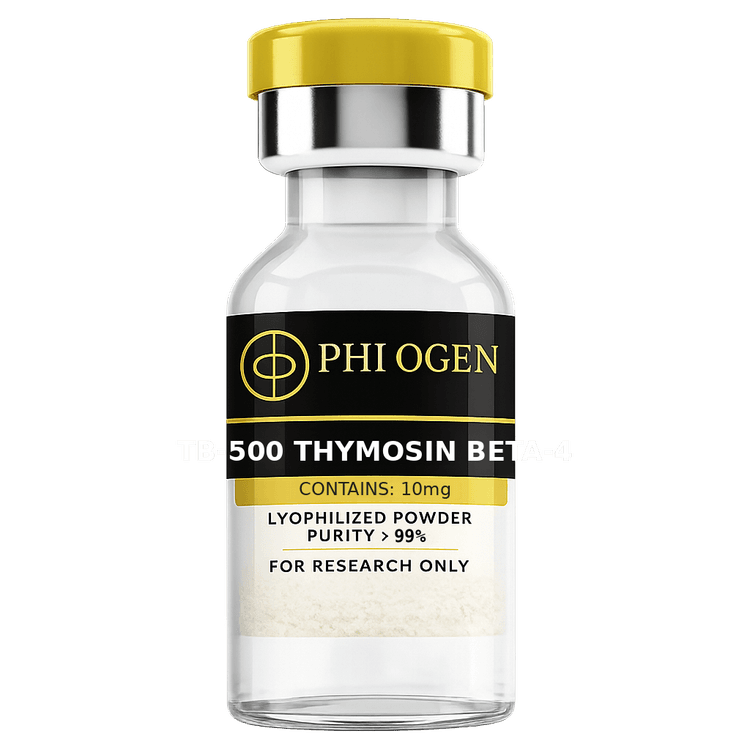
Thymosin Beta-4 Synthetic Fragment
Buy TB-500 (Thymosin Beta-4)
Not For Human Use, Lab Use Only.
Systemic tissue repair through actin regulation and cell migration. The most studied systemic healing peptide — frequently stacked with BPC-157 for synergistic effects.
≥98% Purity
HPLC Verified
Research Grade
Lyophilized
Fast Shipping
Free $200+
Specifications
TB-500 (Thymosin Beta-4) — What the Compound Does in the Cell
- 1
Actin G-Binding & Cell Migration
TB-500 binds to actin G monomers, sequestering them and modulating the actin cytoskeleton. This directly facilitates cell migration — allowing fibroblasts, endothelial cells, and keratinocytes to move into injury sites for repair. TB-500's systemic reach makes it particularly useful for injuries distant from the injection site.
- 2
Anti-Inflammatory Action
TB-500 downregulates inflammatory markers including TNF-α and IL-6 at injury sites, reducing chronic inflammation that impairs healing. This anti-inflammatory property makes it useful not just for acute injuries but for chronic tissue breakdown from overtraining.
- 3
Stem Cell Activation
TB-500 promotes the activation and migration of stem cells to injury sites, particularly cardiac progenitor cells (relevant to cardiac TB-4 research) and muscle satellite cells. This stem cell mobilization effect distinguishes it mechanistically from BPC-157.
TB-500 (Thymosin Beta-4) — Co-Administered Peptides
BPC-157
The definitive healing stack. BPC-157 acts locally through NO and VEGF pathways; TB-500 acts systemically through actin and cell migration. Together they cover both local and systemic repair mechanisms.
IGF-1 LR3
TB-500 mobilizes repair cells; IGF-1 LR3 drives the anabolic rebuild — satellite cell activation and muscle protein synthesis. Studied in models requiring both anti-inflammatory and anabolic support.
Buying TB-500 (Thymosin Beta-4): Reconstitution Reference
Illustrative ranges from published laboratory work—reference only, not a protocol for use.
Subcutaneous Injection
2–5 mg bi-weekly
Twice weekly, or weekly
Most common protocol. Systemic reach means injection site does not need to be proximal to injury.
TB-500 (Thymosin Beta-4) — Vial-Specific Reconstitution
10mg + 2mL BAC water = 5mg/mL. For 2.5mg (typical 2x-weekly dose) draw 0.5mL.
TB-500 (~4.9 kDa) can take 2–3 min of gentle swirling to fully dissolve — larger peptide, slower rate. Stable at 2–8°C for 4 weeks post-reconstitution.
TB-500 (Thymosin Beta-4) — Research-Use Notice
This page summarizes identity, purity, and handling context for catalog navigation. It is not medical advice, a drug label, or a summary of clinical outcomes for any use. Materials are sold for legitimate laboratory research only; verify requirements with your institution and the supplier.
Peptides to Buy With TB-500 (Thymosin Beta-4)

TB-500 (Thymosin Beta-4)
from $53.99