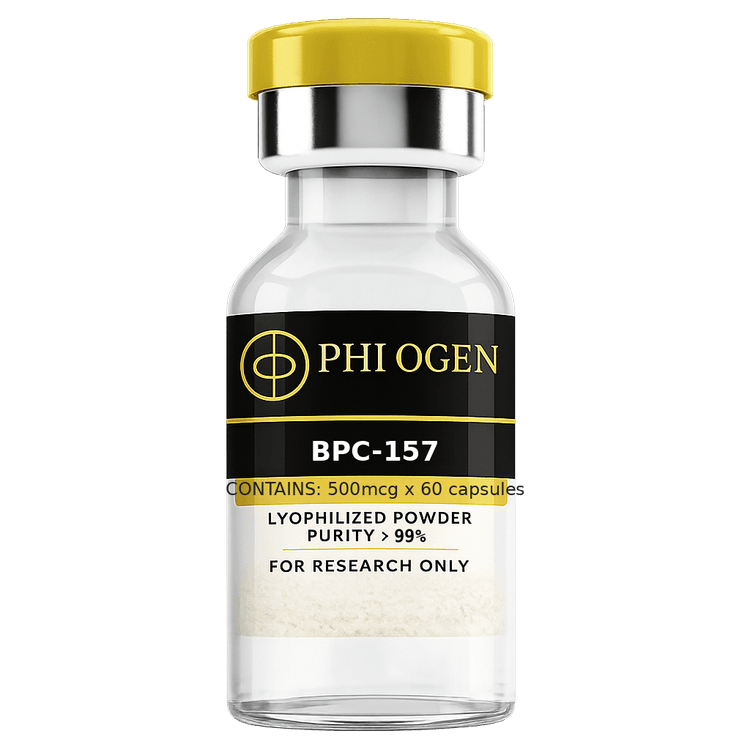
The Healing Pentadecapeptide
Buy BPC-157 Capsules 500mcg x60
15-amino-acid partial sequence of Body Protection Compound — the most studied tissue-repair peptide in research. Over 100 published studies covering tendon, GI, muscle, bone, and nerve repair.
≥98% Purity
HPLC Verified
Research Grade
Lyophilized
Fast Shipping
Free $200+
Specifications
Clavicular's Protocol
BPC-157 is the recovery companion in Clavicular's protocol — paired with Retatrutide to protect the gut and support tissue repair during aggressive caloric restriction and high-intensity training.
See full stack →Mechanism of Action
Nitric Oxide Pathway Upregulation
BPC-157 activates eNOS (endothelial nitric oxide synthase), increasing local NO production and driving vasodilation and angiogenesis at injury sites. This improves blood flow and delivery of repair substrates — a rate-limiting factor in tendon and ligament healing.
Growth Factor Upregulation (VEGF, EGF, PDGF)
BPC-157 upregulates key growth factors at injury sites, driving angiogenesis and cell proliferation. VEGF drives new blood vessel formation; EGF drives epithelial repair; PDGF recruits fibroblasts for collagen synthesis.
FAK-Paxillin Signaling
BPC-157 activates focal adhesion kinase (FAK) and paxillin, regulating fibroblast migration to injury sites — a prerequisite for collagen deposition and tissue remodeling in tendons and ligaments.
Gastroprotection & Gut-Brain Axis
BPC-157 was first identified as an endogenous gastroprotective factor. It reverses NSAID and alcohol-induced GI damage, modulates the dopaminergic and serotonergic systems, and protects the intestinal epithelial barrier.
Research Findings
Tendon & Ligament Repair
In Achilles tendon transection models, BPC-157-treated animals showed significantly superior healing with full tendon reattachment vs controls. Studies consistently report 30–50% faster functional recovery.
Sikiric et al., J Physiol Paris (2003); Staresinic et al., J Orthop Res (2003)
Gastrointestinal Protection
BPC-157 fully reverses ethanol-induced gastric ulcers, protects against NSAID-induced GI damage, and preserves intestinal barrier integrity. The protective effect is dose-dependent and consistent across multiple GI injury models.
Sikiric et al., Curr Pharm Des (2018)
Muscle & Nerve Repair
Crush injury and muscle transection models show significant recovery improvement. Peripheral nerve crush models show enhanced regeneration rates and improved functional outcomes.
Novinscak et al., J Orthop Res (2008); Gjurasin et al., Regul Pept (2010)
Preclinical Safety Data
BPC-157 has no established LD50 in rodent studies — no lethal dose found even at very high doses. No mutagenic, carcinogenic, or teratogenic effects reported in published studies. Strong preclinical safety profile across 100+ studies.
Research Dosing Protocols
From published literature — for research reference only.
Subcutaneous Injection
200–800 mcg/day
Once or twice daily
Most common research protocol. Inject proximal to injury site when possible.
Oral
10–100 mcg/kg
Once daily
Maintains efficacy in GI models despite gastric environment. Studied for gut-specific applications.
Reconstitution Guide
- 1
Allow vial to reach room temperature (10 min).
- 2
Draw 1–2 mL bacteriostatic water. Inject slowly down the vial wall.
- 3
Swirl gently until dissolved — do not shake.
- 4
10mg + 2mL BAC water = 5,000 mcg/mL. For 500 mcg dose, draw 0.1mL.
- 5
Store at 4°C. Use within 4 weeks. Label with date.
Stacking Guide
TB-500
BPC-157 drives local angiogenesis and growth factor upregulation. TB-500 drives systemic cell migration through actin regulation. The two work on complementary pathways — the most studied healing peptide stack.
GHK-Cu
$50.00GHK-Cu adds collagen and elastin synthesis on top of BPC-157's repair signaling — particularly useful for skin and soft tissue applications requiring structural rebuild.
Frequently Asked Questions
What is BPC-157?
BPC-157 (Body Protection Compound-157) is a synthetic 15-amino-acid peptide derived from a sequence found in human gastric juice. Extensively studied by Sikiric et al. at Zagreb University for tissue repair, GI protection, and neurological effects.
BPC-157 vs TB-500 — which is better?
They work through different mechanisms. BPC-157 drives local repair via NO, VEGF, and FAK signaling. TB-500 works systemically through actin regulation and cell migration. They are frequently studied together for synergistic effects — neither is strictly 'better'; they complement each other.
Is BPC-157 orally active?
Research suggests partial activity when taken orally, particularly for GI applications. Systemic bioavailability via oral route is lower than injectable for non-GI applications.
What is the half-life of BPC-157?
Plasma half-life is estimated under 4 hours from rodent pharmacokinetic data, hence daily dosing in most research protocols.
Research Disclosure: All products on this page are for laboratory research purposes only. They are not FDA-approved for human consumption, injection, or therapeutic use. Research findings cited are from preclinical and clinical studies and should not be interpreted as medical advice. Always consult a licensed healthcare provider.
Related Products
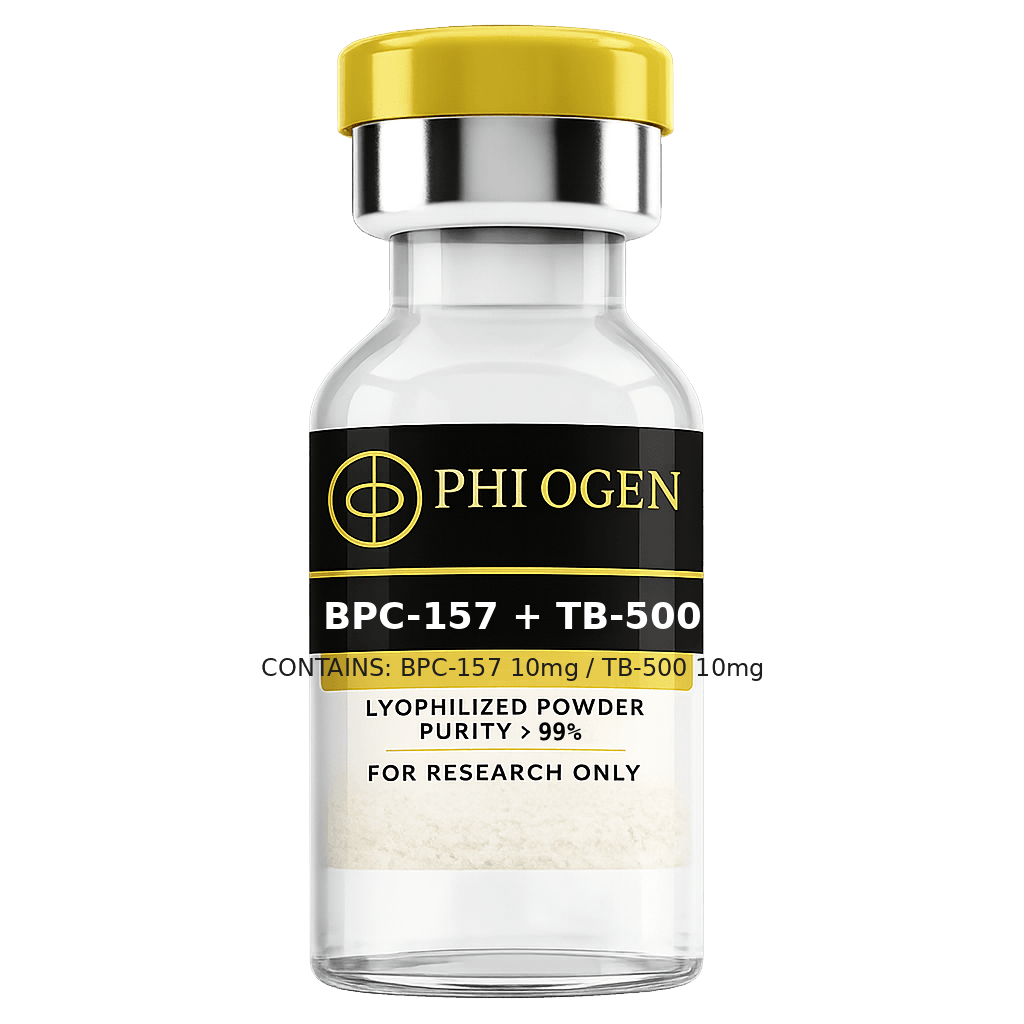
BPC-157 + TB-500 Blend 20mg
Buy BPC-157 + TB-500 Blend 20mg online — research-grade lyophilized peptide for laboratory use. Body Protection Compound-157 (15-amino-acid pentadecapeptide). ≥98% HPLC purity verified.
CAS: 137525-51-0
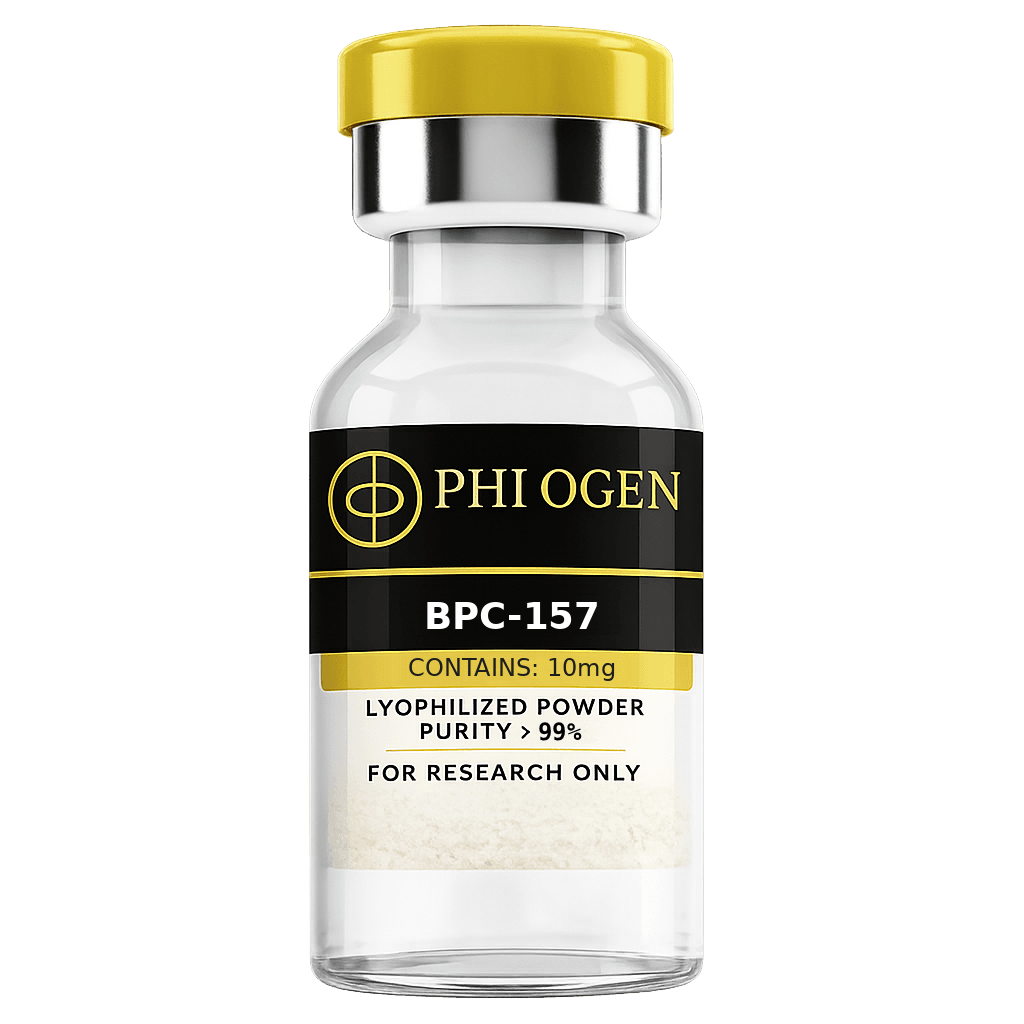
BPC-157 Capsules 500mcg x60
$79.99