Part of Clavicular's Looksmaxxing Stack
Bulk GHK-Cu — extended skin and collagen research supply for the full looksmaxxing protocol.
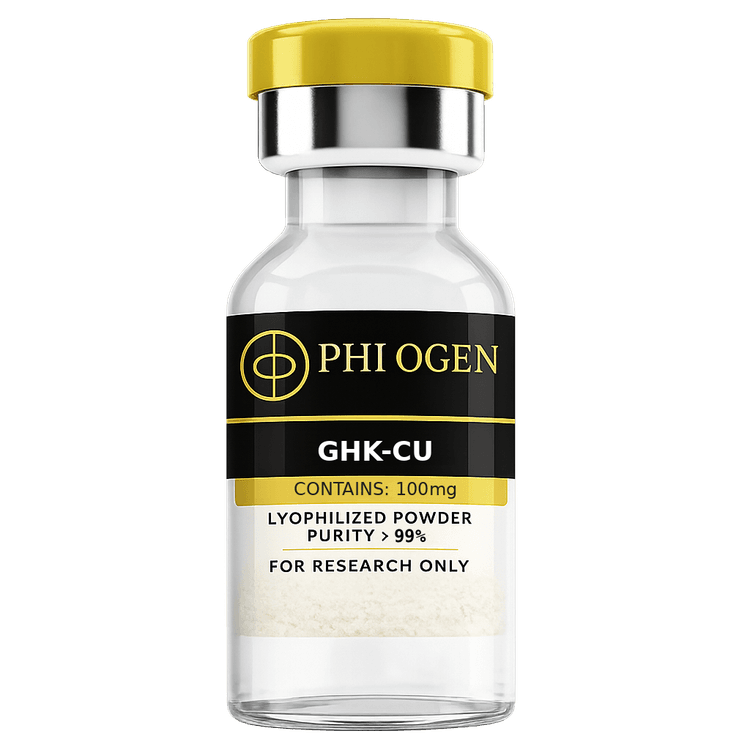
Copper-Binding Regenerative Tripeptide
Buy GHK-Cu 100mg
Naturally occurring copper peptide with one of the broadest gene-activation profiles in skincare research. Activates ~4,000 genes involved in tissue repair, collagen synthesis, and skin remodeling.
≥98% Purity
HPLC Verified
Research Grade
Lyophilized
Fast Shipping
Free $200+
Specifications
Mechanism of Action
Gene Activation — 4,000+ Repair Genes
A landmark gene microarray study by Pickart and Margolina identified GHK-Cu as activating approximately 4,000 human genes — including genes involved in collagen synthesis, elastin production, antioxidant defense, and anti-inflammatory pathways. This broad activation profile distinguishes GHK-Cu from single-pathway compounds.
Collagen & Elastin Synthesis
GHK-Cu stimulates fibroblast proliferation and upregulates collagen I, III, and VI synthesis alongside elastin and proteoglycans. Research shows increased skin firmness and thickness with topical application — the primary reason it is used in anti-aging skincare.
Antioxidant & Anti-Inflammatory Activity
GHK-Cu downregulates inflammatory genes including TNF-α, IL-6, and NF-κB pathways. Simultaneously, it upregulates antioxidant enzymes including superoxide dismutase (SOD) and catalase, reducing oxidative stress in aged tissue.
Angiogenesis & Wound Healing
GHK-Cu promotes VEGF expression and microvascular development — the same angiogenic pathway exploited by BPC-157. In wound healing models, GHK-Cu accelerates closure through combined fibroblast recruitment, collagen deposition, and vascular ingrowth.
Research Findings
Skin Thickness & Firmness
Double-blind trials of topical GHK-Cu formulations showed significant improvements in skin laxity, firmness, and fine line density vs placebo. Histological analysis confirmed increased dermal collagen density.
Pickart et al., J Biomater Sci Polym Ed (2008); Finkley et al., Cosmet Dermatol (2007)
Wound Healing
GHK-Cu-impregnated dressings showed superior wound closure rates in controlled studies. Mechanisms include enhanced fibroblast migration, collagen lattice contraction, and neovascularization.
Hostynek et al., Skin Pharmacol Physiol (2011); Pickart (2015)
Gene Expression Profile
Microarray analysis identified GHK-Cu activating 4,085 and suppressing 2,852 genes involved in tissue repair — including the p63 pathway (stem cell maintenance), SPARC/osteonectin (collagen assembly), and decorin (TGF-β regulation). The largest gene-activating profile reported for a cosmetic peptide.
Pickart & Margolina, Biomedicines (2018)
Hair Growth
GHK-Cu promotes hair follicle stem cell activation and prolongs the anagen (growth) phase. Studies show increased hair follicle size and density with topical application. Mechanism involves IGF-1 upregulation and vascular support to follicles.
Uno & Kurata, J Invest Dermatol (1993); Pickart (2015)
Preclinical Safety Data
GHK-Cu has an excellent safety profile supported by decades of use in cosmetic formulations and wound care products. It is a naturally occurring molecule found in human plasma. No toxicity, carcinogenicity, or mutagenicity has been reported. Topical formulations have been used commercially without significant adverse events. High-dose injectable research data is limited.
Research Dosing Protocols
From published literature — for research reference only.
Topical Application
0.1–2% concentration in serum
Once or twice daily
Most studied application method. Apply to cleansed skin, allow absorption before moisturizer. Synergistic with retinoids on complementary pathways.
Subcutaneous / Intradermal
1–5 mg per application
2–3x weekly
Used in some research protocols for localized tissue repair. Inject proximal to target tissue.
Stacking Guide
Tretinoin / Retinoids
Tretinoin accelerates cell turnover; GHK-Cu stimulates collagen synthesis. The two work on complementary pathways without interference. Together they represent the most evidence-backed anti-aging topical combination available.
BPC-157
BPC-157 provides systemic wound healing and angiogenesis; GHK-Cu provides topical collagen and elastin synthesis. Stacked for skin repair, scar reduction, and anti-aging — the two most researched skin-active peptides.
Retatrutide
During rapid fat loss from GLP-1 class compounds, skin elasticity can be compromised. GHK-Cu's collagen-stimulating effects help maintain skin quality and reduce loose skin formation during aggressive body recomposition.
Frequently Asked Questions
What is GHK-Cu?
GHK-Cu (glycyl-L-histidyl-L-lysine copper complex) is a naturally occurring tripeptide-copper complex found in human plasma, saliva, and urine. It declines with age (from ~200 ng/mL at 20 to ~80 ng/mL at 60). Discovered by Loren Pickart in 1973, it has been studied extensively for wound healing, skin regeneration, and anti-aging applications.
How many genes does GHK-Cu activate?
A comprehensive gene microarray study identified GHK-Cu as activating approximately 4,085 genes and suppressing 2,852 genes — including those involved in collagen synthesis, antioxidant defense, anti-inflammatory pathways, and stem cell maintenance. This is one of the broadest gene-activation profiles reported for any cosmetic or research peptide.
What is the difference between GHK and GHK-Cu?
GHK is the tripeptide backbone (Gly-His-Lys). GHK-Cu is the copper complex — the biologically active form where copper is chelated to the histidine residue. GHK-Cu has significantly greater biological activity than the free peptide due to copper's role in activating copper-dependent enzymes.
Can GHK-Cu be used with Tretinoin?
Yes — GHK-Cu and tretinoin work through complementary mechanisms and are compatible. Tretinoin (retinoic acid) accelerates epidermal cell turnover and reduces fine lines. GHK-Cu stimulates collagen and elastin in the dermis. Using both addresses both epidermal and dermal aging simultaneously.
How should GHK-Cu be stored?
Lyophilized GHK-Cu should be stored at −20°C and is stable for up to 24 months. In solution, store at 4°C and use within 4 weeks. GHK-Cu is relatively stable compared to larger peptides but should be protected from prolonged light exposure.
Research Disclosure: All products on this page are for laboratory research purposes only. They are not FDA-approved for human consumption, injection, or therapeutic use. Research findings cited are from preclinical and clinical studies and should not be interpreted as medical advice. Always consult a licensed healthcare provider.
Complete Your Stack
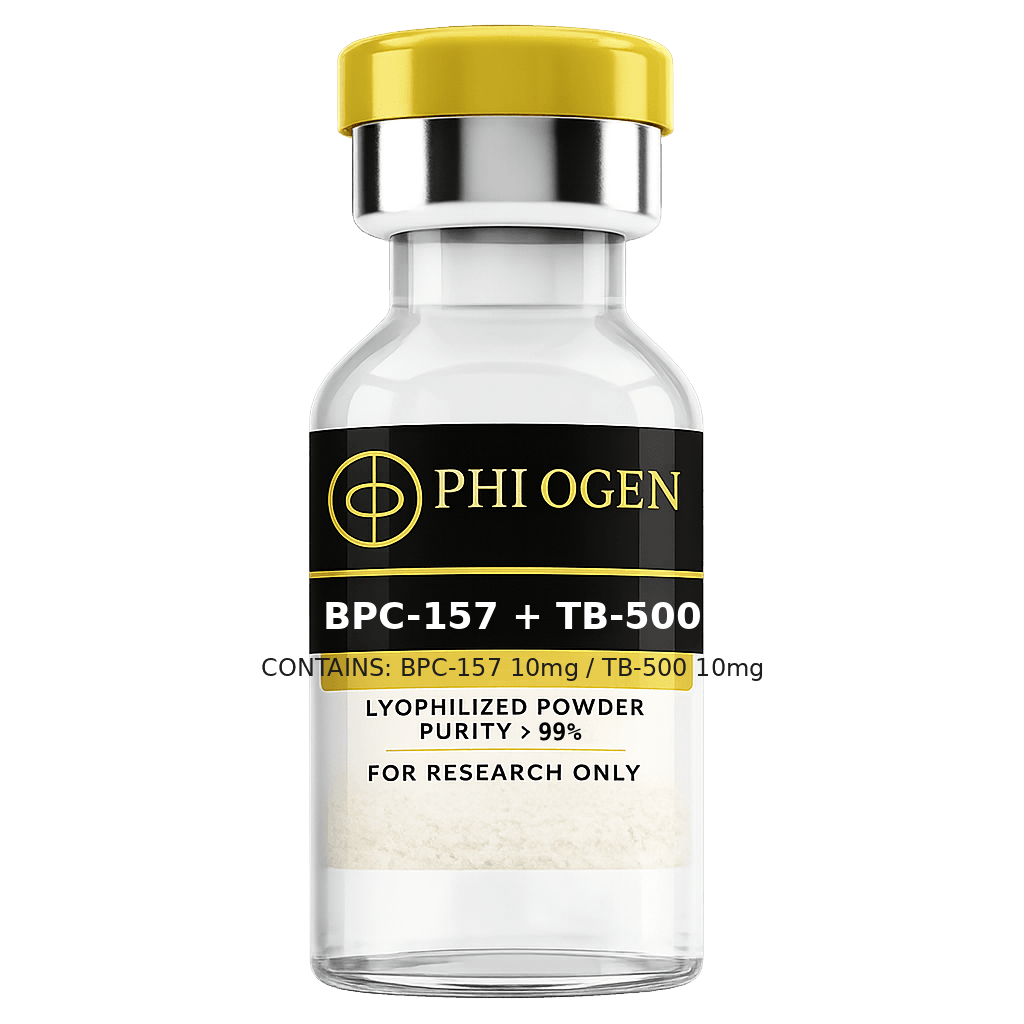
BPC-157 + TB-500 Blend 20mg
Buy BPC-157 + TB-500 Blend 20mg online — research-grade lyophilized peptide for laboratory use. Body Protection Compound-157 (15-amino-acid pentadecapeptide). ≥98% HPLC purity verified.
CAS: 137525-51-0
GHK-Cu 100mg
$89.99