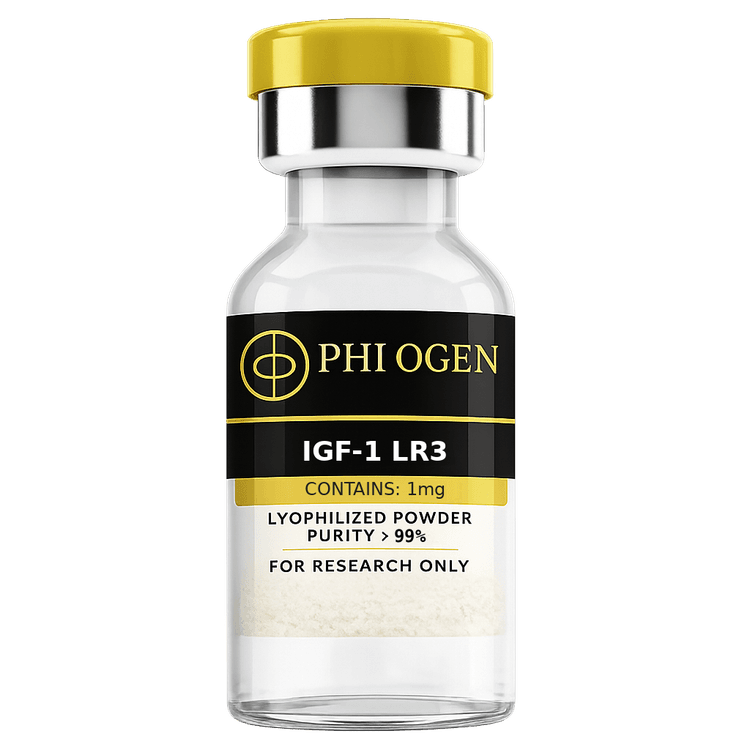
Long-Acting Insulin-Like Growth Factor Analog
Buy IGF-1 LR3 1mg
Modified IGF-1 with 3-4x longer half-life than native IGF-1. Drives muscle protein synthesis and satellite cell activation through direct IGF-1 receptor binding — without GH intermediary.
≥98% Purity
HPLC Verified
Research Grade
Lyophilized
Fast Shipping
Free $200+
Specifications
Mechanism of Action
Direct IGF-1 Receptor Binding
IGF-1 LR3 binds directly to IGF-1 receptors on muscle, bone, and other tissues — activating PI3K/Akt and MAPK/ERK pathways that drive cell growth, protein synthesis, and differentiation. Unlike GH secretagogues, it bypasses the GH → liver → IGF-1 axis entirely.
Reduced IGF Binding Protein Affinity
Native IGF-1 is rapidly cleared by IGF binding proteins (IGFBPs), particularly IGFBP-3. The LR3 modification (Arg substitution at position 3, plus N-terminal 13-amino-acid extension) dramatically reduces IGFBP binding — extending the half-life from ~6 hours to ~20–30 hours and increasing receptor exposure time.
Muscle Satellite Cell Activation
IGF-1 LR3 activates muscle satellite cells (muscle stem cells), which differentiate into myotubes and fuse with existing muscle fibers — increasing muscle fiber number and size. This myogenic effect is particularly significant in resistance training research models.
Research Findings
Muscle Protein Synthesis
IGF-1 LR3 significantly increases muscle protein synthesis through PI3K/Akt/mTOR pathway activation — the same signaling cascade responsible for resistance-training-induced hypertrophy.
LeRoith & Roberts, Horm Res (1991); Florini et al., Endocrinology (1991)
Satellite Cell & Myogenesis
Direct IGF-1 receptor activation potently stimulates muscle satellite cell proliferation and differentiation. Research shows increased muscle fiber number (hyperplasia) and size (hypertrophy) vs controls.
Adams (2002), Sports Med; Goldspink & Yang (2004), Muscle Nerve
Preclinical Safety Data
IGF-1 LR3 research in cell and animal models is extensive. Primary safety concern in research is hypoglycemia risk — IGF-1 has insulin-like effects and can lower blood glucose. Monitoring of blood glucose in research protocols is standard practice.
Research Dosing Protocols
From published literature — for research reference only.
Post-Training Injection
20–100 mcg/day
Once daily, post-exercise
Post-exercise timing maximizes receptor sensitivity. Inject into or near trained muscle group. Long half-life means a single daily injection maintains elevated IGF-1 levels throughout the day.
Reconstitution Guide
- 1
Add 1 mL bacteriostatic water to the 1mg vial.
- 2
Swirl gently — do not shake. Solution = 1mg/mL = 1,000 mcg/mL.
- 3
For a 50mcg dose, draw 0.05mL. For 100mcg, draw 0.1mL.
- 4
Refrigerate at 4°C after reconstitution. Use within 3–4 weeks.
Stacking Guide
CJC-1295 / Ipamorelin
CJC/Ipamorelin elevates endogenous GH and downstream IGF-1. Adding exogenous IGF-1 LR3 provides a prolonged, direct IGF-1 signal — the two approaches work through the same downstream receptor but different upstream routes.
TB-500
IGF-1 LR3 drives anabolic muscle growth; TB-500 supports the connective tissue and anti-inflammatory environment needed to sustain high-volume training. Complementary in muscle repair research models.
Frequently Asked Questions
What is the difference between IGF-1 and IGF-1 LR3?
IGF-1 LR3 is a modified version of native IGF-1 with two changes: an arginine substitution at position 3 and a 13-amino-acid N-terminal extension. These changes reduce binding to IGF binding proteins (IGFBPs) — extending the half-life from ~6 hours to ~20–30 hours and significantly increasing total receptor activation.
What is IGF-1 LR3's half-life?
Approximately 20–30 hours compared to 5–6 hours for native IGF-1. This extended half-life is the primary practical advantage — once-daily dosing maintains elevated IGF-1 receptor activation throughout the day.
Research Disclosure: All products on this page are for laboratory research purposes only. They are not FDA-approved for human consumption, injection, or therapeutic use. Research findings cited are from preclinical and clinical studies and should not be interpreted as medical advice. Always consult a licensed healthcare provider.
Related Products
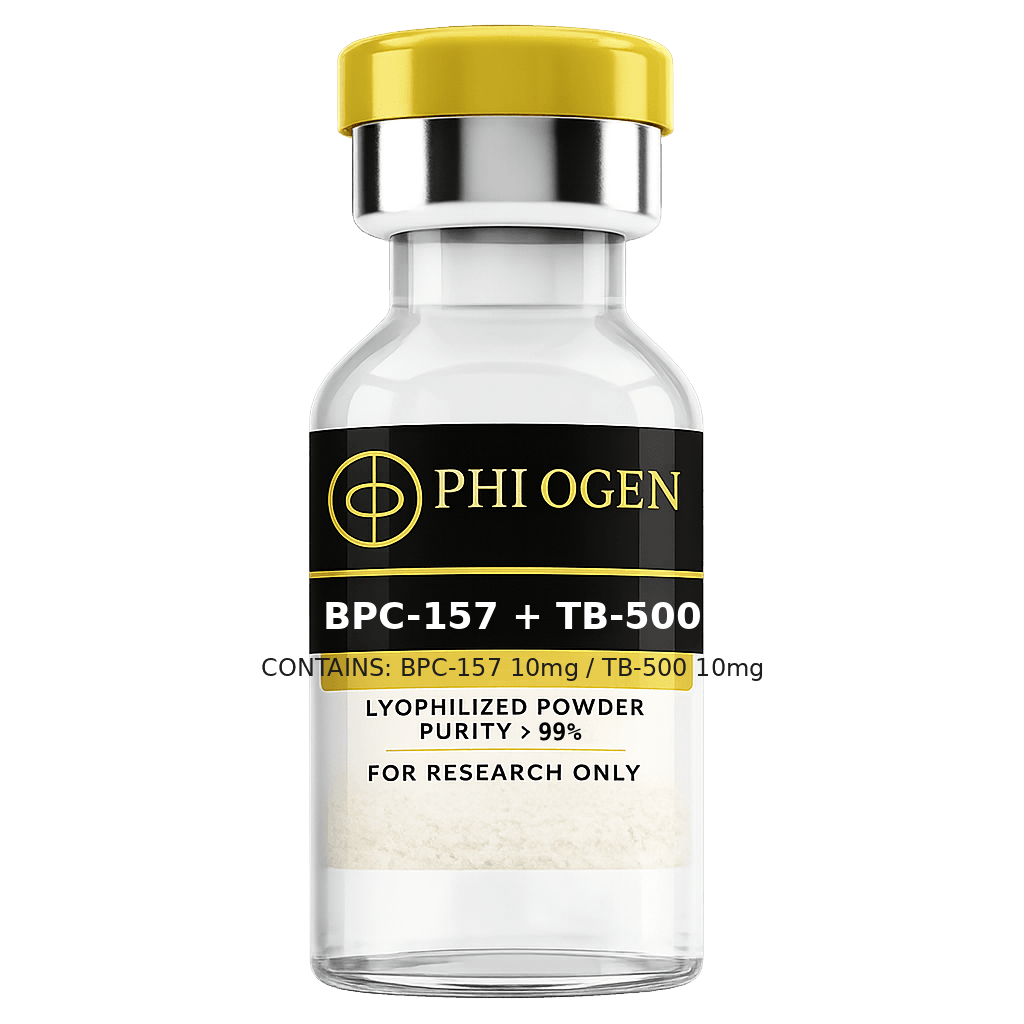
BPC-157 + TB-500 Blend 20mg
Buy BPC-157 + TB-500 Blend 20mg online — research-grade lyophilized peptide for laboratory use. Body Protection Compound-157 (15-amino-acid pentadecapeptide). ≥98% HPLC purity verified.
CAS: 137525-51-0
IGF-1 LR3 1mg
$79.99