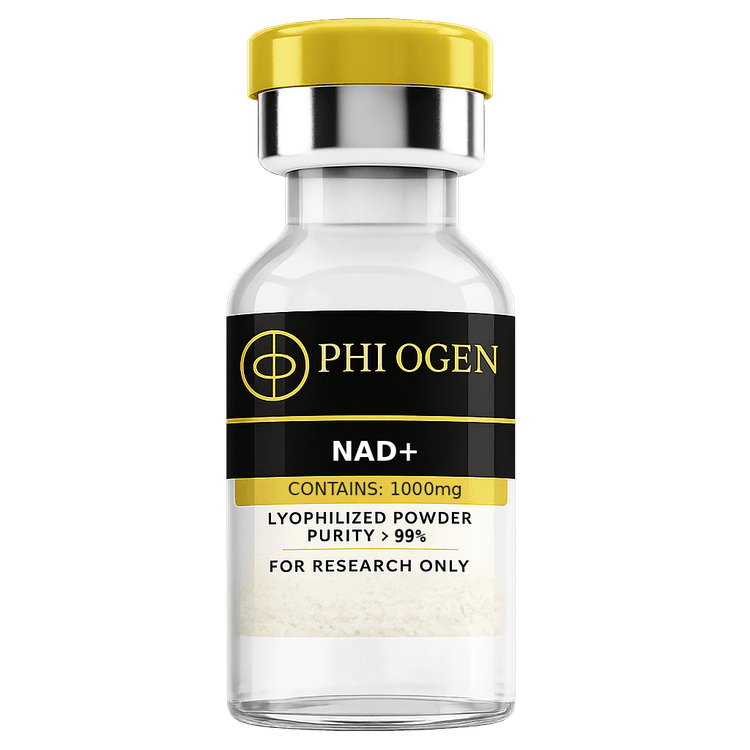
Nicotinamide Adenine Dinucleotide — Cellular Energy Cofactor
Buy NAD+ 1000mg
Essential coenzyme in all living cells — required for cellular energy production, DNA repair, and sirtuin-mediated longevity pathways. Declines ~50% between age 40 and 60.
≥98% Purity
HPLC Verified
Research Grade
Lyophilized
Fast Shipping
Free $200+
Specifications
Mechanism of Action
Cellular Energy Production (Krebs Cycle / ETC)
NAD+ is an essential electron carrier in the mitochondrial electron transport chain, accepting electrons from the Krebs cycle and enabling ATP synthesis. Without sufficient NAD+, mitochondrial efficiency drops and cellular energy production declines — a hallmark of biological aging.
Sirtuin Activation (SIRT1–7)
Sirtuins are NAD+-dependent deacylases that regulate gene expression, DNA repair, and metabolic homeostasis. SIRT1 and SIRT3 have been most studied for longevity and metabolic effects. NAD+ availability is rate-limiting for sirtuin activity — raising NAD+ levels directly increases sirtuin function.
PARP-Mediated DNA Repair
PARP (poly ADP-ribose polymerase) enzymes consume NAD+ to repair DNA strand breaks. As DNA damage accumulates with age, PARP activity increases and NAD+ is depleted — creating a vicious cycle. Restoring NAD+ supports PARP's ability to maintain genomic integrity.
Research Findings
Age-Related NAD+ Decline
Human tissue studies confirm NAD+ levels decline approximately 50% between age 40 and 60. This decline correlates with mitochondrial dysfunction, reduced metabolic efficiency, and impaired DNA repair — core hallmarks of biological aging.
Zhu et al., PLOS One (2015); Yoshino et al., Cell Metab (2018)
Mitochondrial Function
NAD+ supplementation in aged mice restores mitochondrial function, improves exercise capacity, and reduces markers of metabolic disease. Muscle fiber rejuvenation observed in rodent models with NAD+ precursor supplementation.
Gomes et al., Cell (2013); Mills et al., Cell Metab (2016)
Preclinical Safety Data
NAD+ is a naturally occurring molecule in all human cells with no known toxicity. IV administration has been used in clinical and wellness settings. Side effects at high doses or rapid IV infusion include flushing, nausea, and chest tightness — typically managed by slowing infusion rate. No long-term toxicity concerns identified in literature.
Research Dosing Protocols
From published literature — for research reference only.
IV / Subcutaneous Injection
250–500 mg
2–3x weekly or daily
Injectable NAD+ provides direct systemic availability. IV administration produces rapid effects (often within 1–2 hours). Subcutaneous administration is slower-onset but comparable total bioavailability.
Reconstitution Guide
- 1
Add 2–5 mL sterile or bacteriostatic water to the 500mg vial.
- 2
Swirl gently to dissolve. NAD+ dissolves readily.
- 3
500mg + 5mL = 100mg/mL. For 250mg dose, draw 2.5mL.
- 4
Use immediately or refrigerate at 4°C. Use within 24–48 hours of reconstitution.
Stacking Guide
Epithalon
Epithalon targets telomere biology; NAD+ supports the cellular energy and sirtuin-mediated maintenance processes that depend on telomere integrity. Together they address two distinct but related hallmarks of cellular aging.
GHK-Cu
$50.00NAD+ restores cellular energy and DNA repair; GHK-Cu activates collagen synthesis and tissue repair genes. Complementary longevity and regeneration mechanisms.
Frequently Asked Questions
What is NAD+?
NAD+ (nicotinamide adenine dinucleotide) is a coenzyme found in all living cells, essential for over 500 enzyme reactions. Its two primary roles are energy production (as an electron carrier in the mitochondria) and signaling (activating sirtuins and PARPs for DNA repair and gene regulation).
Why does NAD+ decline with age?
Multiple factors contribute: increased PARP activity (consuming NAD+ for DNA repair as damage accumulates), reduced synthesis from precursors, and increased CD38 activity (a major NAD+-degrading enzyme that increases with age and inflammation).
What is the difference between NAD+, NMN, and NR?
NMN (nicotinamide mononucleotide) and NR (nicotinamide riboside) are NAD+ precursors that are converted to NAD+ in cells. Injectable NAD+ bypasses the precursor conversion step, providing direct NAD+ availability. Oral NMN/NR are more convenient but have variable bioavailability.
Research Disclosure: All products on this page are for laboratory research purposes only. They are not FDA-approved for human consumption, injection, or therapeutic use. Research findings cited are from preclinical and clinical studies and should not be interpreted as medical advice. Always consult a licensed healthcare provider.
Related Products
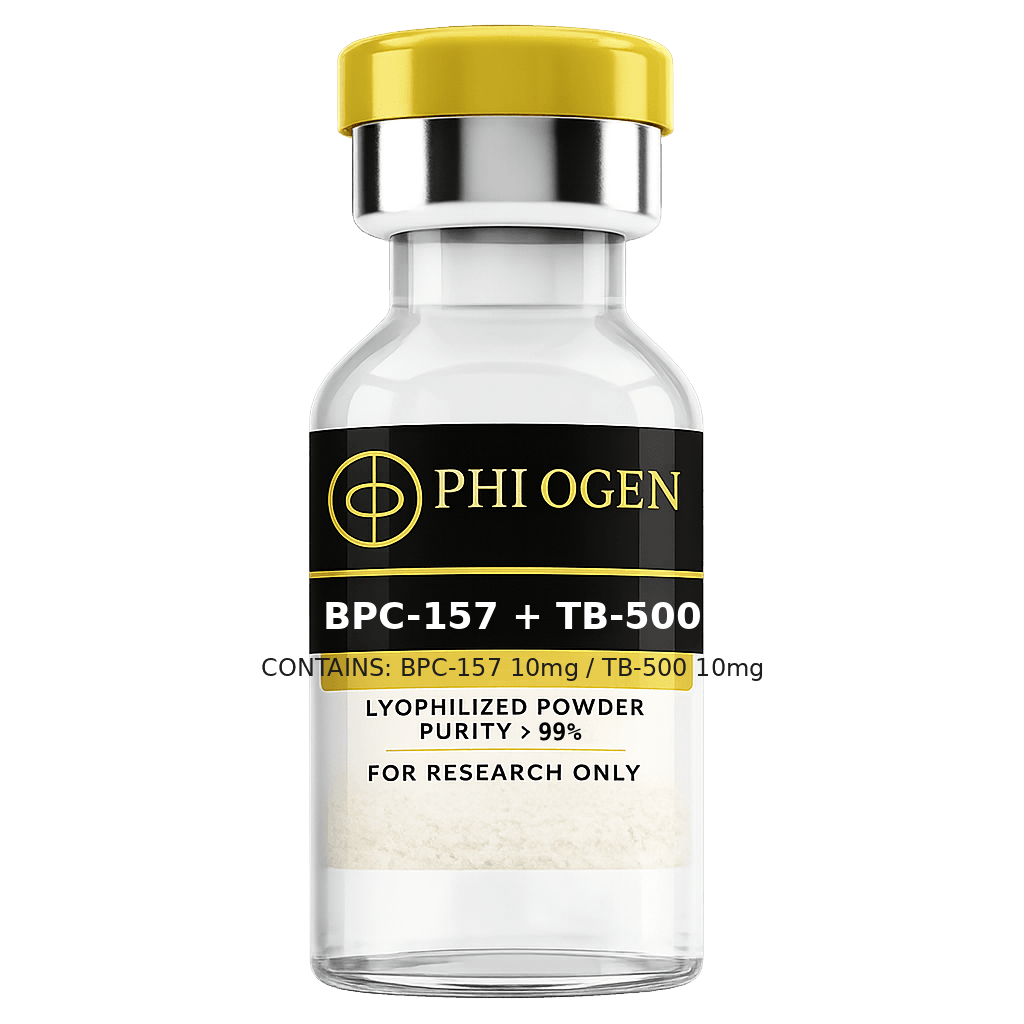
BPC-157 + TB-500 Blend 20mg
Buy BPC-157 + TB-500 Blend 20mg online — research-grade lyophilized peptide for laboratory use. Body Protection Compound-157 (15-amino-acid pentadecapeptide). ≥98% HPLC purity verified.
CAS: 137525-51-0
NAD+ 1000mg
$139.99