Part of Clavicular's Looksmaxxing Stack
TB-500 complements BPC-157 in the looksmaxxing recovery stack. Connective tissue protection during aggressive protocols.
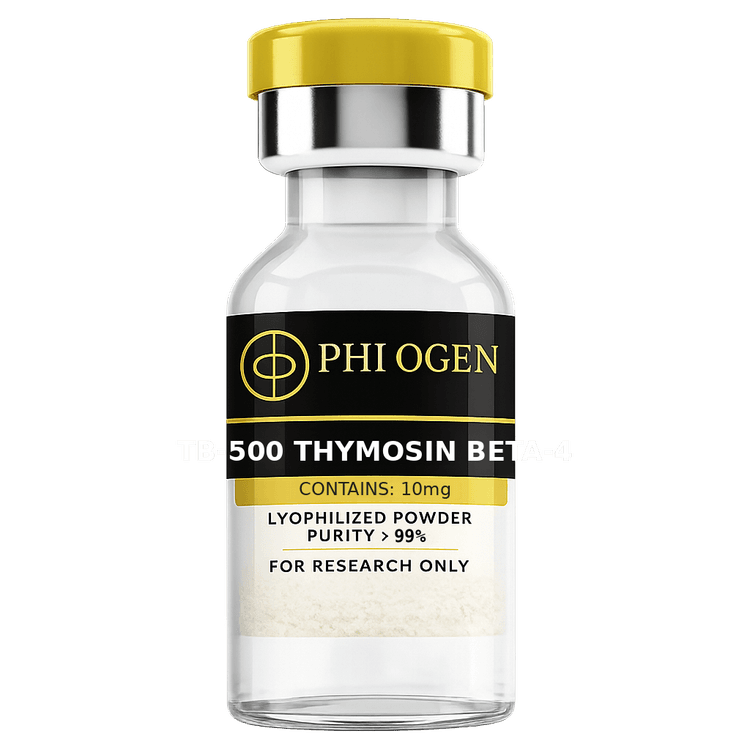
Thymosin Beta-4 Synthetic Fragment
Buy TB-500 (Thymosin Beta-4) 10mg
Systemic tissue repair through actin regulation and cell migration. The most studied systemic healing peptide — frequently stacked with BPC-157 for synergistic effects.
≥98% Purity
HPLC Verified
Research Grade
Lyophilized
Fast Shipping
Free $200+
Specifications
Clavicular's Protocol
TB-500 is recommended alongside BPC-157 in Clavicular's recovery stack — particularly for connective tissue protection during the high-intensity training protocols he pairs with Retatrutide.
See full stack →Mechanism of Action
Actin G-Binding & Cell Migration
TB-500 binds to actin G monomers, sequestering them and modulating the actin cytoskeleton. This directly facilitates cell migration — allowing fibroblasts, endothelial cells, and keratinocytes to move into injury sites for repair. TB-500's systemic reach makes it particularly useful for injuries distant from the injection site.
Anti-Inflammatory Action
TB-500 downregulates inflammatory markers including TNF-α and IL-6 at injury sites, reducing chronic inflammation that impairs healing. This anti-inflammatory property makes it useful not just for acute injuries but for chronic tissue breakdown from overtraining.
Stem Cell Activation
TB-500 promotes the activation and migration of stem cells to injury sites, particularly cardiac progenitor cells (relevant to cardiac TB-4 research) and muscle satellite cells. This stem cell mobilization effect distinguishes it mechanistically from BPC-157.
Research Findings
Cardiac Repair
TB-500's parent molecule (Thymosin Beta-4) has been studied in cardiac ischemia-reperfusion models. TB-4 promotes cardiomyocyte survival, angiogenesis, and cardiac progenitor cell activation after myocardial infarction.
Bock-Marquette et al., Nature (2004); Smart et al., Nat Cell Biol (2007)
Wound & Tissue Repair
TB-500 accelerates wound closure through combined effects: enhanced keratinocyte and endothelial cell migration, new blood vessel formation, and anti-inflammatory action. Studies consistently show superior healing rates vs controls.
Huff et al., Ann NY Acad Sci (2010); Malinda et al., J Invest Dermatol (1999)
Combined BPC-157 + TB-500 Synergy
Research comparing BPC-157 alone, TB-500 alone, and the combination shows additive to synergistic healing effects. The mechanistic logic: BPC-157 provides local vascular and growth factor signaling; TB-500 provides systemic cell mobilization.
Multiple Sikiric lab studies; community research protocols
Preclinical Safety Data
TB-500 has no significant adverse effects reported in preclinical research. Thymosin Beta-4 (the parent molecule) has been studied in human clinical trials for dry eye disease and wound healing with a clean safety profile. No mutagenic or carcinogenic effects reported.
Research Dosing Protocols
From published literature — for research reference only.
Subcutaneous Injection
2–5 mg bi-weekly
Twice weekly, or weekly
Most common research protocol. Systemic reach means injection site does not need to be proximal to injury.
Reconstitution Guide
- 1
Allow vial to warm to room temperature.
- 2
Add 1–2 mL bacteriostatic water by injecting slowly down the vial wall.
- 3
Swirl gently to dissolve.
- 4
10mg + 2mL = 5mg/mL. For 2.5mg dose, draw 0.5mL.
- 5
Refrigerate at 4°C after reconstitution. Use within 4 weeks.
Stacking Guide
BPC-157
The definitive healing stack. BPC-157 acts locally through NO and VEGF pathways; TB-500 acts systemically through actin and cell migration. Together they cover both local and systemic repair mechanisms.
IGF-1 LR3
TB-500 mobilizes repair cells; IGF-1 LR3 drives the anabolic rebuild — satellite cell activation and muscle protein synthesis. Studied in models requiring both anti-inflammatory and anabolic support.
Frequently Asked Questions
What is TB-500?
TB-500 is a synthetic fragment of Thymosin Beta-4 (Tβ4), a naturally occurring 43-amino-acid peptide found in virtually all human and animal cells. TB-500 contains the actin-binding domain of Tβ4 — the portion responsible for cell migration and tissue repair.
What is the difference between TB-500 and Thymosin Beta-4?
Thymosin Beta-4 (Tβ4) is the full 43-amino-acid peptide found naturally in the body. TB-500 is a synthetic fragment corresponding to the Ac-SDKP sequence — the active actin-binding region of Tβ4. TB-500 is more cost-effective to synthesize while retaining the key biological activity.
TB-500 vs BPC-157 — which should I research?
They have different mechanisms and research applications. BPC-157 has more published studies (100+) and evidence for local tissue repair, tendon healing, and GI protection. TB-500 provides systemic reach and stem cell mobilization. Most advanced research protocols use both together.
Research Disclosure: All products on this page are for laboratory research purposes only. They are not FDA-approved for human consumption, injection, or therapeutic use. Research findings cited are from preclinical and clinical studies and should not be interpreted as medical advice. Always consult a licensed healthcare provider.
Complete Your Stack
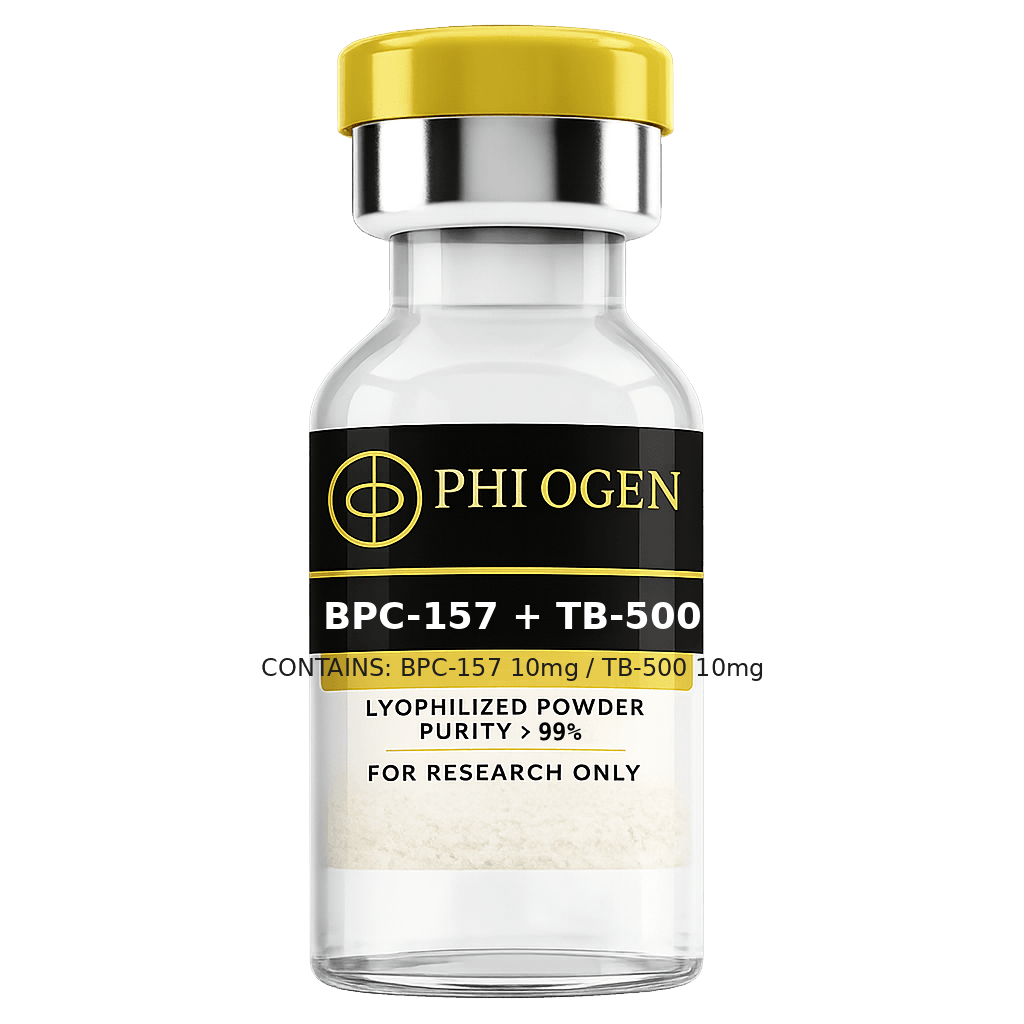
BPC-157 + TB-500 Blend 20mg
Buy BPC-157 + TB-500 Blend 20mg online — research-grade lyophilized peptide for laboratory use. Body Protection Compound-157 (15-amino-acid pentadecapeptide). ≥98% HPLC purity verified.
CAS: 137525-51-0
TB-500 (Thymosin Beta-4) 10mg
$59.99